
Generative Artificial Intelligence (GenAI) is revolutionising the way we interact with technology, offering powerful tools to generate everything from text to images with just a simple prompt. GenAI is built on Large Language Models (LLMs), which are trained on massive amounts of data to predict sentences, paragraphs, or even whole documents. These models can produce human-like responses across a wide range of topics. However, when it comes to complex, highly specialised fields like Aviation, GenAI faces unique challenges.
What are LLMs, and how do they work?
Large Language Models (LLMs) like those used in services like ChatGPT are designed to predict the next word in a sentence based on an input sentence or request called a “prompt”. They have been trained on huge datasets, which allows them to “understand” and respond to various subjects. By processing this data, LLMs can generate meaningful text, making them useful for tasks like drafting emails, summarising documents, or answering customer queries. They can even mimic different writing styles, which is why they’re called “Generative” AI.
Despite their impressive capabilities, LLMs have limitations, especially when applied to industries like aviation.
Where GenAI shines
GenAI is particularly good at handling tasks like:
– Generating content: Text generation, summarisation, and writing assistance for general topics.
– Customer service: Answering common questions in natural language, making it easier for customers to interact with businesses.
– Automation: Streamlining repetitive tasks like data entry or report generation.
For industries like social media or marketing, where the language is common and straightforward, GenAI excels. But what about sectors like aviation, where the language is more technical and precise?
The Aviation challenge: More than just words
One of the significant drawbacks of GenAI is that it struggles with specialised language. Aviation, engineering, and technical fields have their own jargon, acronyms, and terminology that aren’t as well-represented in the data these models are trained on.
For example, if you ask an LLM to generate content about the latest social media trends, it will do so effortlessly, drawing from the vast amount of training data on that topic. However, if you ask it to explain the intricacies of aircraft maintenance or part numbers, it may struggle. This happens because aviation terms and part numbers are rare in the training data compared to everyday language.
Aviation terms are more expensive for GenAI
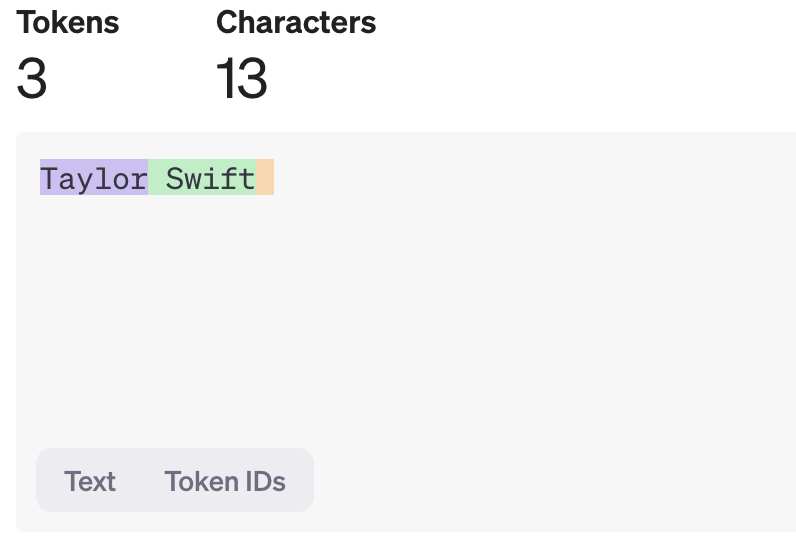
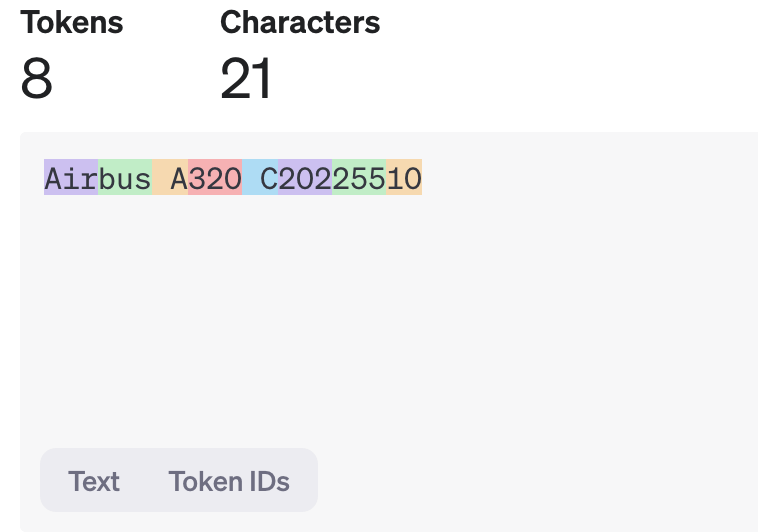
LLMs use tokens to process and generate text. Tokens are small units of meaning, often individual words or parts of words. When dealing with highly technical fields like aviation, the number of tokens required increases dramatically. For instance, aviation terms can cost 4-6 times as much in tokens compared to common social media terms, and part numbers can cost up to 10 times as much.
To illustrate this, tools like OpenAI’s Tokenizer can show how GenAI “sees” language. When you enter common words, the token count is low, making the process efficient. But when you enter technical aviation terms, the token count rises significantly, making it more costly and less efficient for these models to generate accurate and detailed responses.
The Weaknesses of GenAI in Aviation
LLMs have several limitations when applied to the aviation industry:
– Lack of industry-specific knowledge: LLMs aren’t as familiar with aviation terminology or technical engineering language, leading to inaccurate or incomplete responses.
– Token cost inefficiency: More tokens are required to understand and generate text for aviation-related content, making it costly and less efficient.
– Explainability issues: In a highly regulated industry like aviation, transparency and verification are essential. GenAI models often operate as black boxes, making it difficult to explain their decisions—an issue that is unacceptable in safety-critical sectors.
How Ascend Solutions Can Help Overcome These Challenges
At Ascend Solutions, we understand both the potential and the limitations of Generative AI in the aviation industry. We have deep experience in both fields, which gives us the unique ability to tailor GenAI applications to meet the specific needs of aviation. Here’s how we do it:
– Pre-processing and Post-processing: We don’t just rely on raw GenAI outputs. By carefully preparing the input data (pre-processing) and refining the output (post-processing), we ensure that the information generated by LLMs meets the high standards required in aviation. This includes filtering for accuracy, ensuring proper terminology, and reducing token inefficiency.
– Pipeline Optimisation: We build robust data pipelines that integrate GenAI with other tools, allowing for seamless, accurate, and cost-efficient processes. Our pipelines are designed to handle specialised language, and we implement additional steps to verify the outputs, ensuring they are both reliable and explainable.
– Expert Knowledge: Our team comprises both aviation veterans and machine learning specialists. This means we can bridge the gap between cutting-edge AI technology and the rigorous demands of the aviation industry. We know where GenAI can add value and where it falls short, and we have the expertise to make up for these gaps.
Conclusion: Navigating GenAI in Aviation
Generative AI and Large Language Models have incredible potential, but applying them to aviation comes with its own set of challenges. While LLMs are great for generating everyday content, their lack of familiarity with technical aviation terms and their inefficiency in processing specialised language mean they can’t be used out-of-the-box in this industry.
At Ascend Solutions, we have the experience and knowledge to overcome these obstacles. By optimising data pipelines, ensuring accuracy, and leveraging our dual expertise in aviation and AI, we help businesses harness the power of GenAI while meeting the strict standards of safety and reliability required in aviation.
Let us help you unlock the potential of GenAI for your aviation needs—safely, efficiently, and effectively. Get in touch for more information
 Ascend Solutions